You do not have to feel sick to want more information about your health. Many people schedule preventive imaging because they have a family history that concerns them, years of lifestyle or occupational exposure, a previous health finding, or simply a desire to take a more proactive approach.
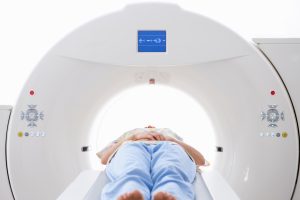
A preventive Full Body CT creates detailed images of multiple areas of the body during one appointment. It can provide a broader internal health snapshot, but it is important to understand what that information represents. The scan does not diagnose every condition, predict the future, or replace routine medical care. Instead, it provides imaging observations that you can review with a qualified healthcare provider.
What Does a Thyroid Ultrasound Show?
- The thyroid gland’s size and shape
- The texture of the thyroid tissue
- Areas of enlargement or inflammation
- Thyroid nodules and cysts
- Whether a nodule appears solid, fluid-filled, or mixed
- Blood flow within the gland or a nodule
- Nearby cervical lymph nodes
A normal thyroid ultrasound generally shows a gland with an expected size and shape and no concerning nodules or diffuse changes. If the scan shows something different, that does not automatically mean something serious is wrong. It gives your healthcare provider more information to work with.
What Can Changes in Thyroid Texture or Size Mean?
When thyroid tissue looks rough, patchy, heterogeneous, or coarsened, the pattern may suggest inflammation or an autoimmune thyroid condition. Hashimoto’s Thyroiditis, for example, can create this type of inflammatory change even when thyroid hormone levels remain within a normal range.
Ultrasound also measures the overall size of the gland. Generalized enlargement may occur with a goiter, which simply means an enlarged thyroid. If the enlarged gland also contains several nodules, doctors may describe it as a multinodular goiter.
A thyroid ultrasound evaluates structure rather than hormone function, so it cannot determine whether the gland is overactive or underactive. Doctors use blood tests to evaluate conditions such as hypothyroidism and hyperthyroidism.
These findings help doctors understand changes affecting the thyroid gland as a whole. If the scan also identifies a nodule, ultrasound can provide more specific information about that individual area.
What Can an Ultrasound Reveal About Thyroid Nodules?
Thyroid nodules can look very different on ultrasound, and the scan helps doctors understand whether a nodule needs monitoring or further evaluation.
A thyroid nodule ultrasound can detect nodules that measure only a few millimeters, including nodules that may be too small to feel during a physical exam. The scan records the nodule’s location, size, and composition.
A thyroid nodule may contain solid tissue, fluid, or a mixture of both. This helps doctors distinguish a thyroid cyst from a solid or mixed nodule and better understand the finding.
Some nodules have a more reassuring appearance, while others may need a closer look. Ultrasound can also track a nodule over time, allowing doctors to compare measurements and see whether it grows, shrinks, or changes in appearance. Radiologists may then use a structured system called TI-RADS to classify those ultrasound features and guide follow-up.
What Does TI-RADS Mean on a Thyroid Ultrasound Report?
- Composition (what the nodule is made of)
- Echogenicity (how bright or dark it appears on ultrasound)
- Shape (whether the nodule is wider than tall or taller than wide)
- Margins (how clearly defined the edges are)
- Echogenic foci (small calcium deposits or other reflective spots)
TI-RADS combines those findings with the nodule’s size to place it into a category. That category guides whether a doctor recommends future ultrasound monitoring, a fine needle aspiration (FNA) biopsy, or no further action. TI-RADS helps doctors base the next step on the specific features of that nodule rather than treating every thyroid in the same way.
Can a Thyroid Ultrasound Evaluate Thyroid Cancer?
When a thyroid nodule needs further evaluation, an ultrasound helps doctors identify features that may appear reassuring or may raise concern. Thyroid cancer affects over 40,000 people in the U.S. each year, so ultrasound plays an important role when doctors evaluate thyroid nodules and nearby lymph nodes.
A thorough neck ultrasound can also examine nearby cervical lymph nodes. If a lymph node looks unusual in size, shape, or internal appearance, the doctor can consider that finding alongside the thyroid nodule, symptoms, and medical history.
When Might a Doctor Recommend an FNA Biopsy?
An ultrasound does not diagnose thyroid cancer. If a nodule has certain characteristics or meets size-based criteria, a doctor may recommend an FNA biopsy for additional evaluation.
During an ultrasound-guided FNA, the specialist uses real-time ultrasound images to guide the needle into the targeted nodule and collect a precise sample. A laboratory then examines the cells to provide information that imaging alone cannot.
What Should You Expect During a Thyroid Ultrasound?
A thyroid ultrasound is a safe, cost-effective, non-invasive, painless imaging test that usually requires little to no special preparation, though it helps to avoid wearing necklaces or other neck jewelry so the area stays accessible.
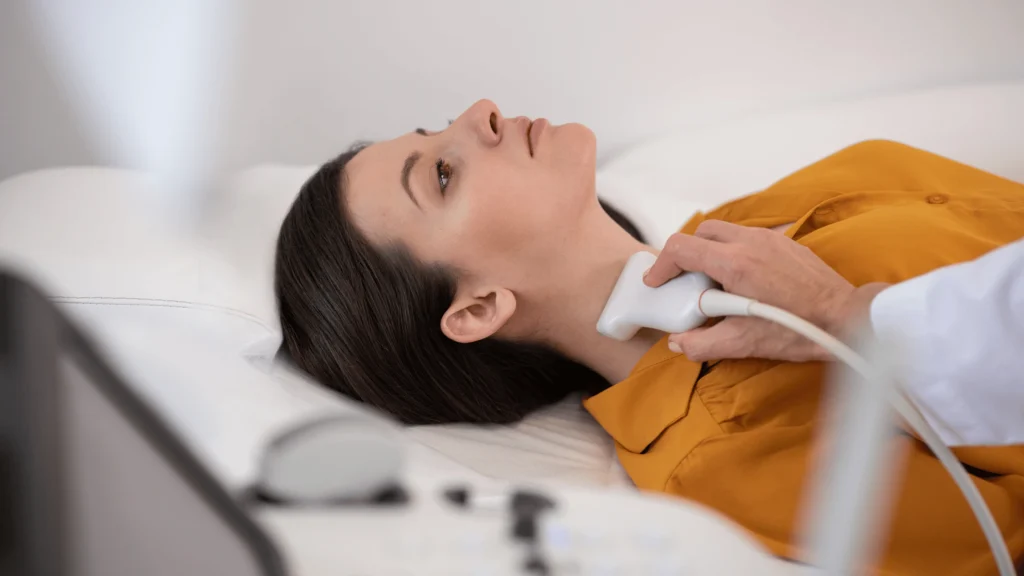
You lie on your back on an exam table with your neck slightly extended. The technician applies gel to the skin over the thyroid and moves a handheld device called a transducer across the front and sides of your neck to capture images of the thyroid. The transducer sends sound waves into the body, and the ultrasound machine converts those signals into real-time images on a computer screen.
The procedure typically takes about 20 to 30 minutes. The exam does not use radiation or require sedation, and advanced ultrasound technology supports clear imaging, so you can usually return to normal activities right away.
When Might a Doctor Recommend a Thyroid Ultrasound?
- A new or growing lump in the neck
- A known thyroid nodule
- An enlarged thyroid gland
- A thyroid abnormality found on another imaging test
- A nodule that needs follow-up or monitoring
- Persistent hoarseness or trouble swallowing
- Unexplained neck swelling
- Certain risk factors, including family history or previous radiation exposure to the head or neck
These symptoms or risk factors can give your healthcare provider a reason to look more closely at the gland. Doctors do not recommend thyroid ultrasound as routine thyroid cancer screening for every asymptomatic adult. Instead, the exam helps evaluate a known concern, risk factor, or finding when there is a reason to look more closely.
Where Can You Get a Thyroid Ultrasound Near Dallas?
If you are searching for a thyroid ultrasound near me or comparing options for thyroid ultrasound in Dallas, Visionary Wellness & Imaging is an imaging center that provides thyroid ultrasound in Irving, TX for clients throughout Dallas, Las Colinas, Fort Worth, and the greater DFW area.
At Visionary Wellness & Imaging, being proactive starts with getting more information when there is a reason to look deeper. A thyroid ultrasound can give you a clearer view of a known thyroid concern so you can better understand the findings, review them with your healthcare provider, and decide what comes next.
Explore the conditions we scan for, learn more about our Irving location, or schedule a scan if you have a known thyroid nodule, a neck change, a relevant risk factor, or a provider recommendation.